Solar Calculator Pakistan Guide - Size, Cost & Savings 2026
The ultimate Pakistan-first solar planning manual. Learn how to calculate system size, panel and inverter pricing, NEPRA net billing models, and common installer scams.
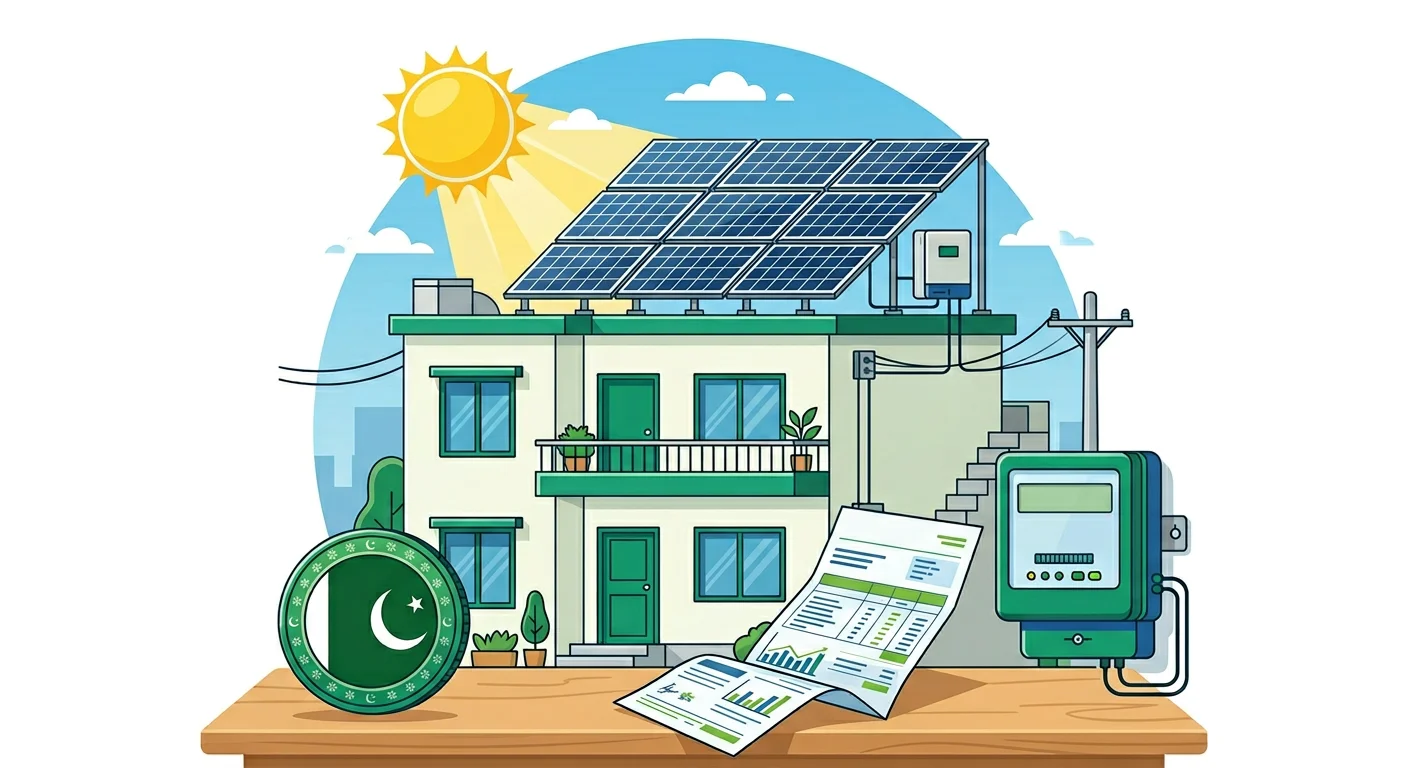
A Solar Calculator Pakistan is a specialized digital planning tool that estimates your ideal system capacity, required panels, roof space, setup cost, monthly bill savings, investment payback, and long-term financial return based on local electricity tariffs and climate conditions.
Electricity costs across Pakistan have crossed historically high limits. In 2026, non-protected residential families frequently face tariffs ranging from Rs. 35 to Rs. 48 per unit, heavily inflated by Fuel Price Adjustments (FPA), taxes, and surcharges. Sizing a rooftop solar system has transitioned from a premium lifestyle upgrade to an essential survival strategy.
To accurately assess your potential savings, you can input your latest bill units directly into our interactive Solar Calculator Pakistan to plan your rooftop footprint and calculate payback timelines. For a comprehensive mapping of utility pricing grids, combine your solar planning with our electricity bill calculator guide alongside our interactive Electricity Bill Calculator Pakistan tool to study domestic progressive slabs.
1. The Core Sizing Formula for Pakistani Rooftops
Estimating solar system requirements relies on a basic engineering formula adjusted for local atmospheric factors like summer heat coefficient drops, monsoon clouds, and winter smog. To find your ideal system capacity, use the following equation:
System Size (kW) = Monthly Units ÷ 30 ÷ Active Sun Hours ÷ (1 - Loss Factor)
Where:
- Monthly Units: Your average utility consumption in kilowatt-hours (kWh).
- Active Sun Hours: Average daily peak sun duration (typically 5.2 to 5.6 hours depending on your city location).
- Loss Factor: A standard 15% (0.15) allowance representing heat de-rating, dust build-up, wiring impedance, and inverter efficiency losses.
Real-World Pakistan Example: Suppose your household in Lahore consumes 600 units/month. Utilizing the city peak sun hour constant of 5.3 and standard 15% losses:
600 ÷ 30 ÷ 5.3 ÷ 0.85 = 4.43 kW
Rounding up to accommodate physical module ratings, you would install a 5 kW solar array comprising nine high-purity 550W panels.
2. On-Grid vs. Hybrid vs. Off-Grid Comparison Matrix
Selecting the correct system topology is critical to balancing upfront capital with load-shedding relief. Review this comparison matrix before signing vendor contracts:
| System Type | Ideal Use Case | Outage Backup | Net Metering Fit | Cost Benchmark |
|---|---|---|---|---|
| On-Grid Solar | Urban homes with zero to rare load shedding | None (shuts down) | 100% Compatible | Lowest Cost |
| Hybrid Solar | Standard Pakistani homes with daily load shedding | Immediate (Battery bank) | 100% Compatible | Medium Cost |
| Off-Grid Solar | Remote agricultural tube wells or isolated rural areas | Full battery operation | Not Applicable | Highest Cost |
3. NEPRA Net Billing 2026: The Financial Reality
In February 2026, the National Electric Power Regulatory Authority (NEPRA) shifted new prosumer connections from standard 1:1 net metering to a Net Billing model. Understanding how this changes your financial return is vital:
- The Export Discount: Under net billing, units imported from your DISCO continue to be charged at your marginal slab rate (Rs. 35 to 45). However, surplus units exported back to the grid are purchased by the government at the National Average Energy Purchase Price, currently floating around Rs. 10 to 11 per kWh.
- Self-Consumption Optimization: This wide pricing spread means that daytime self-consumption is significantly more valuable than exporting. High-efficiency planning aims to shift major daytime heavy loads, such as water pumps or air conditioners, into peak solar production hours (10:00 AM to 3:00 PM).
- Grandfathering Rules: Existing on-grid or hybrid users who completed net-metering contracts before the transition are legally protected and retain their original 1:1 rates for the duration of their 7-year contracts.
⚠️ Common Solar Planning Mistakes in Pakistan
- Sizing for Peak Export instead of Daytime Load: Because NEPRA prosumer net billing buys units at Rs. 10–11 while DISCO imports cost Rs. 35–45, oversizing a system for exports is financially inefficient. Size to cover your daylight loads.
- Buying Cheap B-Grade Panels: Unscrupulous retailers relabel cracked or rejected modules and sell them without flash-test reports. Always verify panel serial barcodes directly with the Tier-1 brand manufacturer.
- Using Unlicensed Installers: Only Alternative Energy Development Board (AEDB) certified installers are legally authorized to submit bidirectional net-metering applications. DIY or unlicensed handymen will face massive grid delays.
- Neglecting Inverter Ventilation & Surge Protectors: Installing inverters in direct sunlight or failing to install DC surge protection (SPDs) and dual earthing pits is a major fire hazard during summer heatwaves and monsoon lightning.
4. Premium Solar Panel & Inverter Brands in Pakistan
Equipment quality directly affects durability and panel degradation. To analyze how degradation impacts your long-term returns, use our Percentage Calculator Pakistan to track compound efficiency drops. Ensure your installer is sourcing these premium certified brands:
Tier-1 Solar Panels
- Jinko Solar: Particularly their Tiger Neo N-type bifacial panels, known for superior low-light performance.
- Longi Solar: The Hi-Mo series features advanced monocrystalline construction with excellent temperature performance in hot Pakistani climates.
- JA Solar: Deep Blue monocrystalline modules, widely deployed in utility-scale and large residential projects across Punjab and Sindh.
- Trina Solar & Canadian Solar: Renowned for robust structural frames capable of resisting heavy wind loads and regional dust storms.
Tier-1 Solar Inverters
- Premium Smart Inverters: Huawei, Fronius, and SMA represent the premium class, offering 10+ year warranties and advanced grid-forming safety circuits.
- High-Efficiency Hybrid Options: Solis, Growatt, and Knox provide superb balance-of-system features with robust local service and replacement centers in major Pakistani hubs.
- Cost-Effective Workhorses: Inverex, Ziewnic, and Crown are highly popular, catering to budgets with accessible pricing and intuitive user displays.
5. Battery Sizing & Long-Term Maintenance
If selecting a Hybrid or Off-Grid model, your battery choice will define your blackout protection. In Pakistan, the market relies on two main chemistry platforms:
- Tubular Lead-Acid Batteries (e.g., Phoenix, Osaka): These are low-cost options but support a shallow 50% Depth of Discharge (DOD) and require active monthly maintenance (checking electrolyte distilled water levels). Expect replacement every 2–3 years.
- Lithium Iron Phosphate (LiFePO4) Packs: Higher upfront capital, but they support deep 80% DOD cycles, last 10+ years, and require zero liquid maintenance. They are highly safe and do not face explosive thermal runway risks.
Because major solar gear is imported, international exchange volatility directly impacts vendor quotes. If you are financing imported parts, check current interbank and open-market benchmarks on our Currency Converter & Forex Rates Live to verify vendor pricing margins.
📋 What to Do After Estimating Your Solar Sizing
- Acquire Your Sanctioned Load: Look at your electricity bill's top-right corner to check your sanctioned load. Under NEPRA rules, your solar system size cannot exceed your active sanctioned load. Contact your DISCO to upgrade it if needed.
- Procure Three AEDB On-Site Quotes: Contact three registered AEDB-certified installers in your city. Request they perform a structural load check on your rooftop and verify shadow-free orientations.
- Confirm Local Substation Capacity: Have your chosen vendor check if your local distribution transformer is near its net-metering capacity threshold. This prevents delays before bi-directional meter setup.
- Arrange Financing (Optional): If utilizing bank funding, compile your previous 6 months of utility bills and income statements to apply for active SBP green financing schemes.
6. The Net Metering Licensing Journey: Step-by-Step
Navigating grid approvals with LESCO, K-Electric, IESCO, or MEPCO requires standard administrative milestones:
- Structural Load & Design: Your AEDB-certified installer conducts a roof check and designs a single-line electrical schematic.
- Application Filing: The vendor submits your file to the respective DISCO office alongside national CNIC and property ownership records.
- Rooftop & Transformer Inspection: DISCO engineers verify that your sanctioned load matches the inverter rating and check local transformer loading limits.
- Bi-Directional Meter Setup: Once cleared, your old standard meter is removed, and a green smart bi-directional meter is commissioned.
- Generation License Activation: NEPRA issues your formal 5-year solar prosumer generation license, and net billing active offsets begin.
Frequently Asked Questions
Can a 5 kW hybrid solar system run an inverter AC?
Yes. A 5 kW hybrid system is capable of running 1 to 2 inverter ACs (at 1.5-ton ratings) comfortably during peak daylight hours while simultaneously charging batteries and powering standard household lighting, ceiling fans, and refrigerators.
How often do solar panels require cleaning in dusty Pakistani areas?
Dust accumulation (soiling loss) can reduce solar output by 10% to 25% within weeks. In dusty cities like Multan, Faisalabad, or central Lahore, wash panels every 2 weeks using soft, non-chlorinated water and a soft wiper during cool morning hours.
Is bank financing available for solar installations in Pakistan?
Yes, several major banks (such as Meezan Bank, Bank Alfalah, and Faysal Bank) offer specialized solar installment packages. These schemes are backed by State Bank of Pakistan (SBP) green finance guidelines, offering markups below standard commercial loan rates.
What is the typical warranty duration for panels and inverters?
Premium solar panels typically carry a 12-year product materials warranty and a 25-year linear power output performance warranty (guaranteeing over 84% output by Year 25). Modern hybrid inverters offer a 5 to 10-year factory warranty.
Last Updated: August 06, 2026 | Reviewed by Editorial Committee | Sources: National Electric Power Regulatory Authority (NEPRA) Prosumer Regulations, Alternative Energy Development Board (AEDB) installer guidelines, local vendor price surveys.
Abaid Awan
Developer & Editor, PakCalcHubDeveloper & Editor of PakCalcHub. Specialized in microsecond client-side calculation models and statutory FBR/NEPRA/SBP formula verification.
Calculate Solar Calculator Instantly
Zero signups. Microsecond client-side calculations based on latest Pakistan statutory rules.
Salary Tax Calculator Pakistan 2026-27 & 2025-26
FBR salaried tax slabs 2025-26 & 2026-27 with return filing
Use CalculatorRecommended Knowledge Guides
Explore verified Pakistan tax, utility, property, and financial guides.